
Dubai Municipality completes redevelopment of Deira's iconic Clock Tower Roundabout
Clock Tower Roundabout in Deira was built in 1963 to celebrate the emirate's first oil exports. At the time, it was the only entry point for visitors arriving in Dubai.
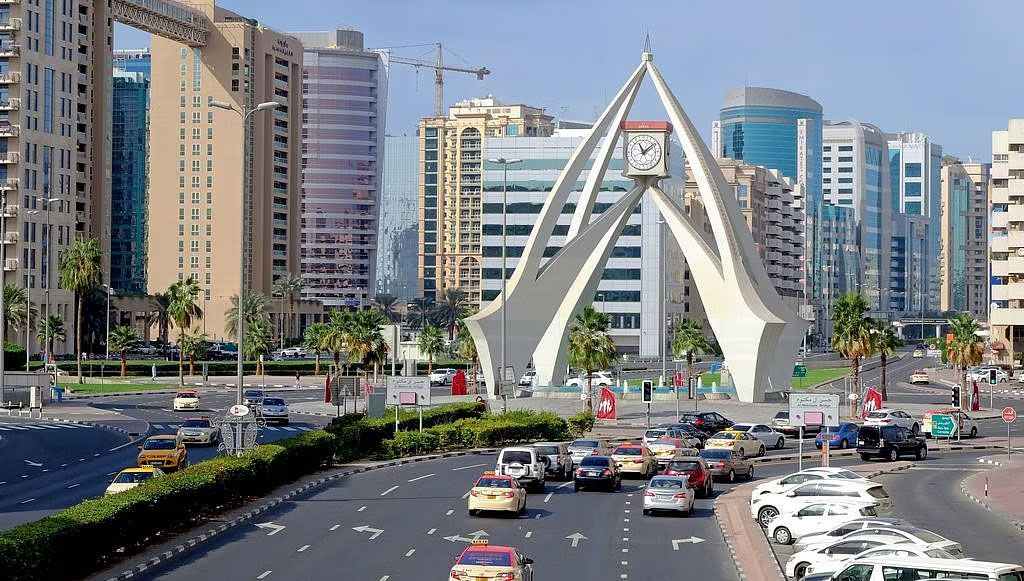
Beautifully landscaped with blooming flowers, lush greenery and water features, the roundabouts in the UAE offer a calming effect and stark contrast to the busy streets. These roundabouts are also significant landmarks that tell the history and tradition of the country - from the Deira Clock Tower in Dubai, which is hailed as one of the best clock towers in the world, to the Teapot and Incense roundabouts in Fujairah.
One of the earliest roundabouts, built before the formation of the UAE, is the Clock Tower Roundabout in Deira, erected in 1963 to celebrate the emirate's first oil exports and has served as a major landmark in the city.
At the time, the Clock Tower's location was originally the only entry point for visitors arriving in Dubai. It was built at the gateway of Maktoum Bridge, which was officially opened in 1963, to provide a vital link between Bur Dubai and Deira.
The Clock Tower R/A has been a silent witness to the rapid change in Dubai. An underpass was constructed in 1982 to ease the traffic in one of the emirate's busiest thoroughfares and the tower was reconstructed in 1989 after the steel reinforcements used to build the structure had corroded.
Concrete was used to strengthen the posts that gracefully arc towards a boxy clock that balances on top at midpoint. The four clock faces were replaced in 1989 with Omega models, incorporating GPS for accuracy and removing the need for manual adjustments.
Now, motorists and visitors arrive from many points of entry but the roundabout still holds its ground as a very important marker for visitors and residents today. Deira Clock Tower also received an accolade from the Telegraph newspaper as being one of the 17 most beautiful clock towers in the world.
Another historical landmark in Dubai is the Fish Roundabout, located at the northwestern periphery of Al Muraqqabat in Deira. It depicts the most important economic trades of Dubai in the 19th and early 20th centuries: fishing and pearl diving. The fish sculpture was created by Iranian artist Mir Ismaili, who studied doctorate of architecture in Paris and has crafted other sculptures in roundabouts across France.
Moving northbound, in Fujairah - its streets are a web connected by a number of roundabouts depicting traditional symbols. The roundabout is named after the Arabic coffeepot called dallah, which is used to brew and serve qahwa. It has a water feature depicting the never-ending pouring of Arabian hospitality into small coffee cups called finjaan.
Another roundabout that has a water feature is the Perfume Roundabout, one of Fujairah's oldest roundabouts that was recently refurbished. Water flows from the bottle and if you're taking a picture from a perfect angle, you might be able to capture it pouring perfume into the setting sun. Fujairah also has a Fish Roundabout, Falcon Roundabout, Pigeon Roundabout, Sword Roundabout, Incense Roundabout and the latest Boat Roundabout.
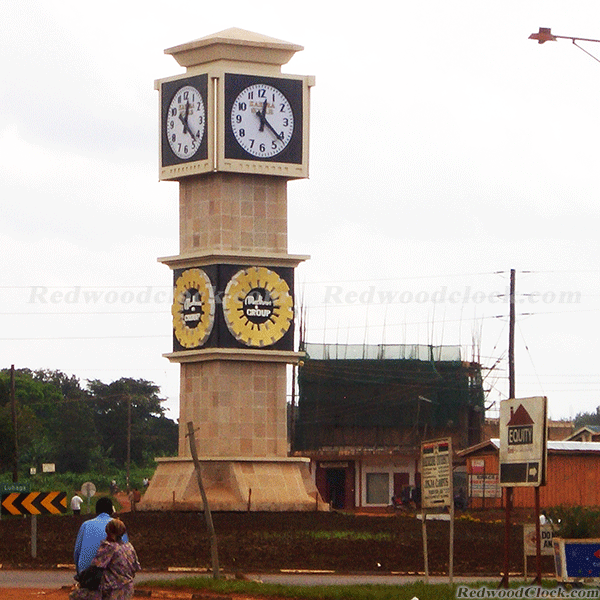 Kakira Clock Tower Installed
Dubai Municipality completes r
Kakira Clock Tower Installed
Dubai Municipality completes r